

What is the water absorption rate of rubber end gaskets?
As a supplier of rubber end gaskets, I often encounter inquiries from customers regarding the water absorption rate of our products. Understanding this property is crucial as it directly impacts the performance and durability of rubber end gaskets in various applications.
The Concept of Water Absorption Rate
The water absorption rate of rubber end gaskets refers to the percentage of water absorbed by the gasket material when it is immersed in water for a specific period under certain conditions. It is an important parameter that reflects the ability of the rubber to resist water penetration. A low water absorption rate indicates that the rubber is less likely to be affected by water, which helps to maintain its physical and mechanical properties over time.
Factors Affecting the Water Absorption Rate
Several factors can influence the water absorption rate of rubber end gaskets.
Rubber Material Type
Different types of rubber have different chemical structures and polarities, which significantly affect their water absorption characteristics. For example, natural rubber (NR) is relatively hydrophilic due to the presence of some polar groups in its molecular structure. As a result, it has a relatively higher water absorption rate compared to some synthetic rubbers. On the other hand, butyl rubber (IIR) has a very low water - absorption rate because of its non - polar and saturated molecular structure. It forms a good barrier against water and moisture, making it suitable for applications where water resistance is critical.
Filler Content and Type
Fillers are often added to rubber compounds to improve their mechanical properties, reduce costs, or enhance other performance characteristics. The type and amount of fillers can have a significant impact on the water absorption rate. For instance, carbon black is a commonly used filler. When used in appropriate amounts, it can help to reduce the water absorption of rubber by filling the voids in the rubber matrix and making it more difficult for water to penetrate. However, if the filler is hydrophilic or if the filler - rubber interface is not well - bonded, it may increase the water absorption rate.
Cross - Linking Density
The cross - linking density of the rubber network also plays a vital role. A higher cross - linking density generally leads to a lower water absorption rate. When the rubber molecules are more tightly cross - linked, there are fewer free spaces for water molecules to enter. This restricts the diffusion of water into the rubber matrix, thereby reducing the water absorption.
Measuring the Water Absorption Rate
To measure the water absorption rate of rubber end gaskets, a standard test method is usually followed. Typically, a sample of the rubber gasket is first weighed accurately (initial weight, (W_1)). Then, the sample is immersed in distilled water at a specified temperature (usually around 23°C) for a set period, often 24 hours or 72 hours. After the immersion period, the sample is removed from the water, the surface water is carefully wiped off, and the sample is weighed again (final weight, (W_2)).
The water absorption rate ((A)) is calculated using the following formula:
[A=\frac{W_2 - W_1}{W_1}\times100%]

Importance of Water Absorption Rate in Applications
The water absorption rate of rubber end gaskets has a profound impact on their performance in different applications.
Sealing Applications
In applications where rubber end gaskets are used for sealing, such as in pipes, valves, or containers, a low water absorption rate is essential. If the gasket absorbs a large amount of water, it may swell, which can lead to changes in its dimensions and shape. This swelling can cause the gasket to lose its sealing effectiveness, resulting in leaks. For example, in a water - filled pipeline, a gasket with a high water absorption rate may swell over time, creating gaps between the mating surfaces and allowing water to escape.
Electrical Applications
In electrical equipment, rubber end gaskets are often used to provide insulation and protection. Water absorption can significantly reduce the electrical insulation properties of the rubber. As water is a conductor of electricity, when the rubber absorbs water, it can create conductive paths within the gasket, increasing the risk of electrical short - circuits and malfunctions. Therefore, for electrical applications, gaskets with extremely low water absorption rates are required.
Outdoor and Marine Applications
Rubber end gaskets used in outdoor or marine environments are constantly exposed to water, humidity, and saltwater. A high water absorption rate can lead to the degradation of the rubber material due to factors such as hydrolysis, oxidation, and the growth of microorganisms. This degradation can weaken the gasket, reduce its elasticity, and ultimately lead to failure. For example, in a boat's engine compartment, a gasket with a high water absorption rate may deteriorate quickly when exposed to seawater, compromising the performance and safety of the engine.
Our Product Range and Water Absorption Rate
At our company, we offer a wide range of rubber end gaskets with different water absorption rates to meet the diverse needs of our customers.
- Rubber Mounting Pad: Our rubber mounting pads are designed to provide excellent vibration isolation and support. We use high - quality rubber materials with low water absorption rates to ensure their long - term performance, even in damp or wet environments.
- Mounting Cushion Isolator: These isolators are crucial for reducing noise and vibration in machinery. The rubber used in our mounting cushion isolators has been carefully selected to have a low water absorption rate, which helps to maintain their mechanical properties and isolation performance over time.
- Rubber Isolation Pad: Our rubber isolation pads are widely used in various industrial and commercial applications. They are engineered to have a low water absorption rate, making them suitable for use in environments where water or moisture is present.
- Rubber Buffer Block: Rubber buffer blocks are used to absorb shock and impact. We ensure that our buffer blocks have a low water absorption rate to prevent swelling and maintain their shock - absorbing capabilities.
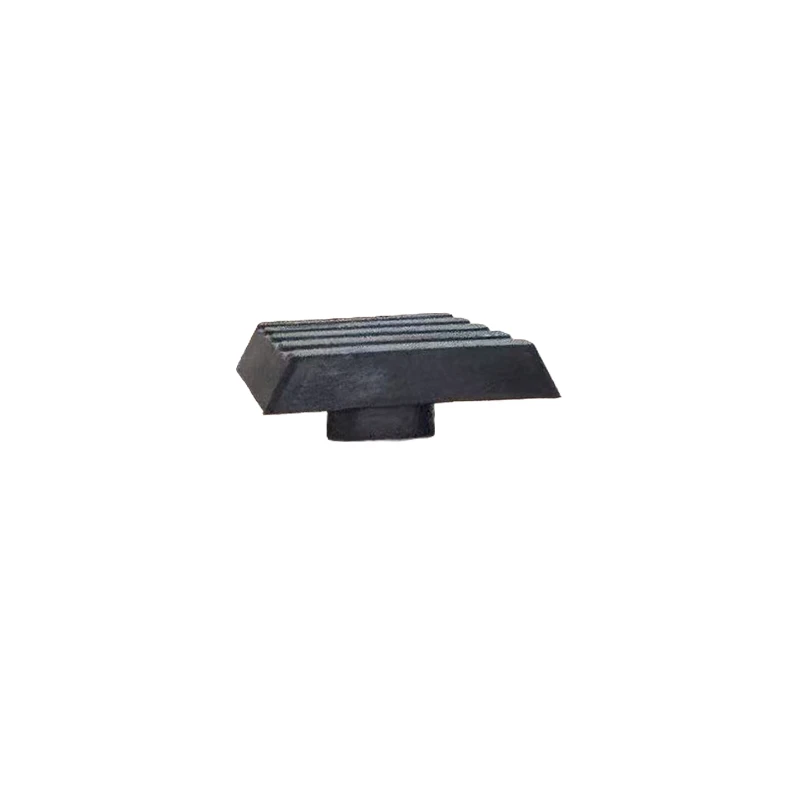
- Rubber End Cushion: These cushions are often used to protect equipment and provide a soft landing. Our rubber end cushions are made from rubber materials with low water absorption rates to ensure their durability and performance.
Contact Us for Procurement
If you are in need of high - quality rubber end gaskets with specific water absorption rate requirements, we are here to help. Our team of experts can provide you with detailed information about our products, assist you in selecting the most suitable gasket for your application, and offer competitive pricing. Whether you are working on a small - scale project or a large - scale industrial application, we have the products and expertise to meet your needs. Please feel free to contact us to start a procurement discussion and find the perfect rubber end gaskets for your requirements.
References
- ASTM D471 - Standard Test Method for Rubber Property - Effect of Liquids.
- ISO 1817:2015 - Rubber, vulcanized or thermoplastic - Determination of the effect of liquids.
- "Rubber Technology" by Maurice Morton.