

What is the maximum load capacity of a rubber shock block?
As a supplier of rubber shock blocks, I often receive inquiries from customers regarding the maximum load capacity of these essential components. Understanding the maximum load capacity of a rubber shock block is crucial for ensuring its effective performance in various applications. In this blog post, I will delve into the factors that influence the maximum load capacity of rubber shock blocks, discuss how to determine it, and highlight the importance of this metric in practical use.
Factors Influencing the Maximum Load Capacity
The maximum load capacity of a rubber shock block is not a fixed value; rather, it is influenced by several factors, which we will explore in detail below.
Material Properties
The type of rubber used in the shock block plays a significant role in determining its load - bearing capacity. Different rubber compounds have distinct mechanical properties such as hardness, elasticity, and tensile strength. For example, natural rubber is known for its high elasticity and good resilience, which allows it to absorb and dissipate energy effectively. However, its load - bearing capacity may be limited compared to some synthetic rubbers.
Synthetic rubbers like neoprene, nitrile, and silicone offer a wide range of properties tailored to specific applications. Neoprene has excellent resistance to oil, ozone, and weathering, and it can withstand relatively high loads in certain environments. Nitrile rubber is highly resistant to oil and fuel, making it suitable for applications where contact with these substances is likely. Silicone rubber is known for its high - temperature resistance and can maintain its properties under extreme conditions, but its load - bearing capacity may vary depending on its formulation.
Shape and Size
The shape and size of the rubber shock block also have a direct impact on its maximum load capacity. A larger shock block generally has a higher load - bearing capacity because it has a greater surface area to distribute the load. For instance, a rectangular shock block with a larger base area can support more weight compared to a smaller one of the same material.
The shape of the shock block can affect how the load is distributed within the rubber. A shock block with a well - designed shape, such as one with a tapered or contoured profile, can distribute the load more evenly, reducing stress concentrations and increasing the overall load capacity. Additionally, the height of the shock block can influence its performance. A taller shock block may have more compression space, allowing it to absorb more energy, but it may also be more prone to buckling under high loads.
Temperature and Environmental Conditions
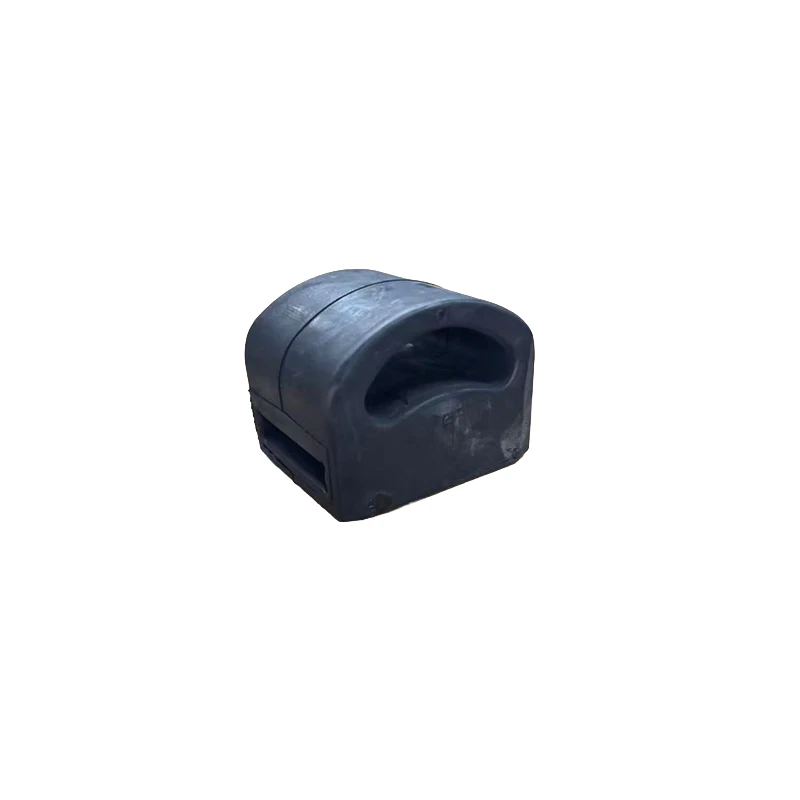
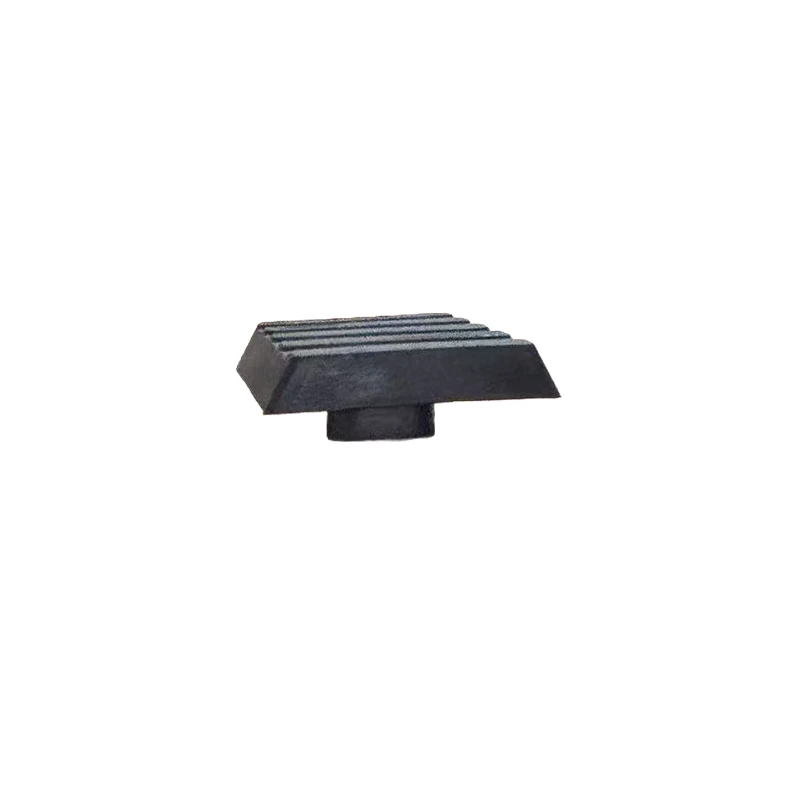
Temperature can significantly affect the mechanical properties of rubber, and thus, its load - bearing capacity. At high temperatures, rubber tends to become softer and more pliable, which can reduce its stiffness and load - bearing ability. Conversely, at low temperatures, rubber can become brittle and lose its elasticity, also leading to a decrease in load capacity.
Environmental factors such as humidity, exposure to chemicals, and UV radiation can also degrade the rubber over time. For example, if a rubber shock block is exposed to harsh chemicals, it may experience swelling or chemical reactions that weaken its structure and reduce its load capacity. Therefore, it is essential to consider the operating temperature and environmental conditions when selecting a rubber shock block with an appropriate load capacity.
Determining the Maximum Load Capacity
Determining the maximum load capacity of a rubber shock block requires a combination of theoretical calculations and practical testing.
Theoretical Calculations
Theoretical calculations are based on the mechanical properties of the rubber material and the geometry of the shock block. These calculations typically involve using equations from mechanics and materials science. For example, the stress - strain relationship of the rubber can be used to estimate the maximum stress that the rubber can withstand before failure.
The Young's modulus of the rubber, which describes its stiffness, is an important parameter in these calculations. By knowing the cross - sectional area of the shock block and the applied load, the stress within the rubber can be calculated. If the calculated stress exceeds the allowable stress of the rubber material, then the shock block may fail. However, theoretical calculations have limitations, as they often assume idealized conditions and do not account for all the real - world factors that can affect the rubber's performance.
Practical Testing
Practical testing is the most reliable way to determine the maximum load capacity of a rubber shock block. This involves applying a gradually increasing load to the shock block until it fails or reaches a predefined level of deformation. The load at which failure occurs or the maximum acceptable deformation is reached is considered the maximum load capacity.
There are various testing methods available, such as compression testing, shear testing, and fatigue testing. Compression testing is commonly used to determine the load - bearing capacity of shock blocks that are primarily subjected to compressive forces. In a compression test, the shock block is placed between two plates, and a load is applied perpendicular to the plates until the desired results are obtained.
Shear testing is used to evaluate the shock block's ability to withstand shear forces. In this test, the shock block is subjected to a force parallel to its surface. Fatigue testing involves applying cyclic loads to the shock block to simulate real - world operating conditions and determine its durability over time.
Importance of Knowing the Maximum Load Capacity
Understanding the maximum load capacity of a rubber shock block is essential for several reasons.
Safety
In applications where rubber shock blocks are used to support heavy loads or absorb impact forces, ensuring that the shock block can handle the expected loads is crucial for safety. If a shock block fails due to an overload, it can lead to equipment damage, downtime, and even pose a risk to personnel. For example, in a machinery application, a failed shock block can cause excessive vibration and misalignment, which may result in premature wear of other components or even catastrophic failure.
Performance Optimization
By selecting a rubber shock block with the appropriate load capacity, the performance of the overall system can be optimized. A shock block that is under - sized for the load will experience excessive deformation, which can lead to reduced energy absorption and increased wear. On the other hand, an over - sized shock block may be more expensive and may not provide the desired level of flexibility or vibration isolation.
Related Products
In addition to rubber shock blocks, we also offer a range of related products, including Rubber Buffer Block, Rubber Isolation Pad, Rubber End Cushion, Rubber Mounting Pad, and Rubber Limit Pad. These products are designed to provide similar functions such as shock absorption, vibration isolation, and load distribution in various applications.
Contact for Procurement
If you are in need of rubber shock blocks or any of our other related products, we encourage you to contact us to discuss your specific requirements. Our team of experts is ready to assist you in selecting the right products with the appropriate load capacity for your applications. We can provide you with detailed product information, technical support, and competitive pricing.
References
- "Rubber Technology Handbook" by Werner Hofmann
- "Mechanical Properties of Rubber" by A. N. Gent
- ASTM standards related to rubber testing, such as ASTM D1414 for rubber O - rings and ASTM D2240 for rubber hardness testing.