

Hey there! As a supplier of rubber buffer pads, I often get asked this question: “Do rubber buffer pads have a uniform thickness?” Well, let's dive right into it.
First off, it's important to understand that the thickness of rubber buffer pads can vary quite a bit. In some cases, we do have pads with a uniform thickness. These are typically used in applications where a consistent cushioning effect is required across the entire surface of the pad. For example, in some industrial machinery, a uniform - thickness rubber buffer pad can help to evenly distribute the shock and vibration, preventing any localized stress points that could potentially damage the equipment.
Take the Mounting Cushion Isolator for instance. This type of rubber buffer pad is designed to isolate vibrations and shocks in various mounting applications. It usually has a uniform thickness to ensure that the isolation effect is consistent throughout. When you install it, you don't have to worry about one part of the pad being more effective than the other because the thickness is the same all around.
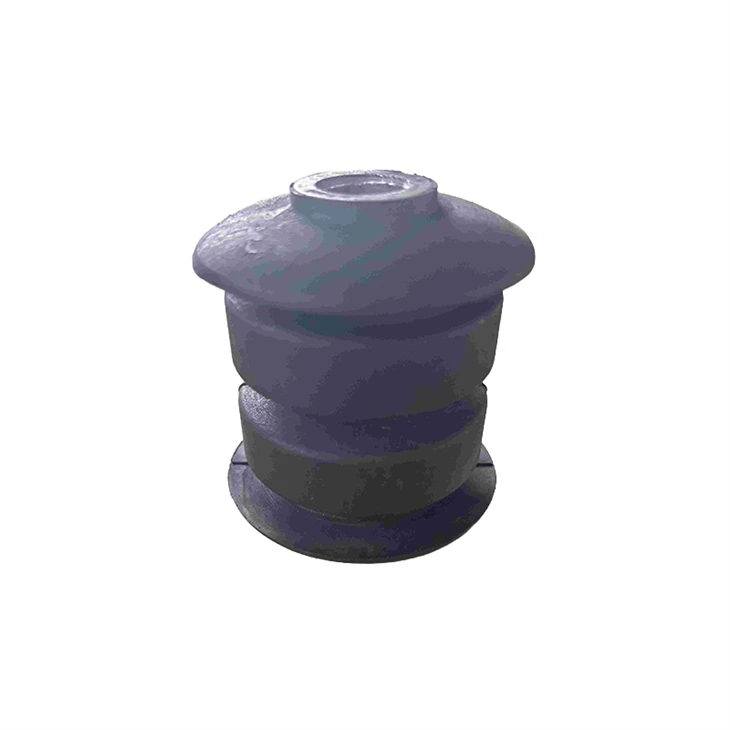
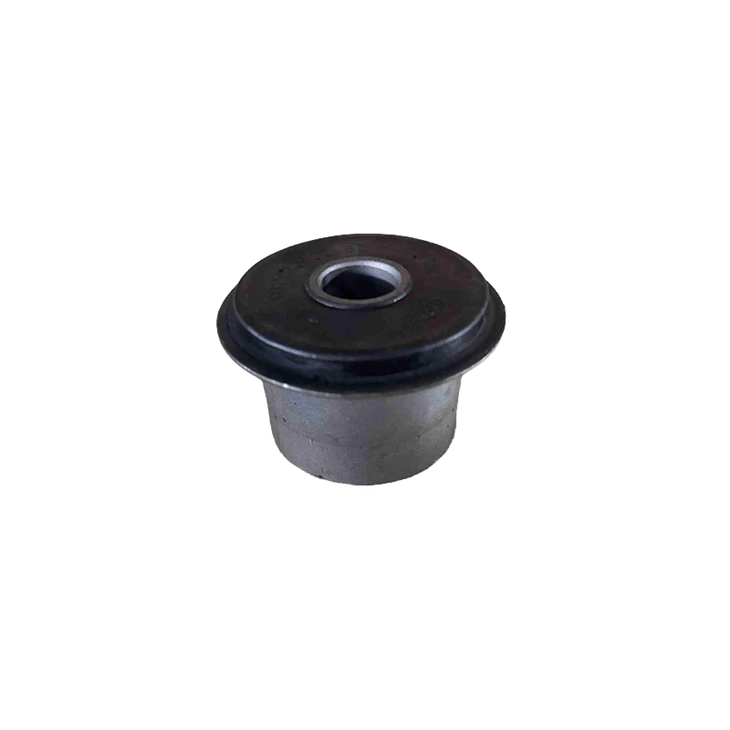
However, not all rubber buffer pads are made with a uniform thickness. There are many situations where a non - uniform thickness is actually more beneficial. In automotive applications, for example, the Rubber Mount for Auto Chassis might have a non - uniform thickness. The reason behind this is that different parts of the auto chassis experience different levels of stress and vibration. The areas that are more prone to high - impact shocks might require a thicker section of the rubber buffer pad, while the areas with less stress can have a thinner section. This way, the pad can provide the right amount of cushioning exactly where it's needed.
Another example is the Automotive Rubber Buffer Assembly. These assemblies are often custom - designed to fit the specific requirements of a vehicle. They may have varying thicknesses to accommodate the complex shapes and stress patterns within the automotive system. By having a non - uniform thickness, the rubber buffer assembly can offer better performance and durability.
The manufacturing process also plays a role in determining the thickness of rubber buffer pads. When we use molding techniques, we can control the thickness quite precisely. But sometimes, factors like the type of rubber material, the temperature during the molding process, and the pressure applied can all affect the final thickness. For instance, if the rubber material has a high viscosity, it might be more difficult to achieve a perfectly uniform thickness during molding.
Let's talk about the Rubber Mounting Pad. These pads are used in a wide range of applications, from small appliances to large industrial equipment. Depending on the application, they can either have a uniform or non - uniform thickness. If it's for a simple application where the load is evenly distributed, a uniform - thickness pad might be sufficient. But for more complex applications with uneven loads, a non - uniform thickness can be a game - changer.
The Rubber Limit Pad is another product in our lineup. It's designed to limit the movement of certain parts and provide a cushioning effect at the same time. In some cases, a uniform thickness is ideal to ensure a consistent limiting force. But in other situations, a non - uniform thickness can be used to create a more progressive limiting effect, which can be very useful in applications where a smooth transition of force is required.
Now, you might be wondering how we ensure the quality of our rubber buffer pads, whether they have a uniform or non - uniform thickness. We have a strict quality control process in place. We use advanced measuring tools to check the thickness at multiple points on each pad. This helps us to ensure that the thickness meets the specifications, whether it's a uniform or non - uniform design.
We also test the performance of our rubber buffer pads under different conditions. We simulate real - world scenarios to see how well the pads can withstand shocks, vibrations, and other stresses. This way, we can guarantee that our products will perform as expected in your applications.
If you're in the market for rubber buffer pads, whether you need a uniform - thickness pad or a non - uniform one, we've got you covered. Our team of experts can help you choose the right product based on your specific requirements. We offer a wide range of rubber buffer pads, from standard sizes to custom - made solutions.
We understand that every application is unique, and that's why we're committed to providing high - quality products that meet your needs. Whether you're working on an automotive project, an industrial machinery installation, or any other application that requires rubber buffer pads, we can provide the right solution.
So, if you're interested in learning more about our rubber buffer pads or want to discuss your specific requirements, don't hesitate to reach out. We're here to help you find the perfect rubber buffer pad for your application.
References:
- Industry standards for rubber buffer pad manufacturing
- Automotive engineering textbooks on vibration isolation and shock absorption
- Research papers on the performance of rubber materials under different stress conditions