

Can rubber buffer blocks be used in high - speed applications? That's a question I get asked a lot as a supplier of rubber buffer blocks. In this blog, I'm gonna break it down for you, looking at the pros and cons, the science behind it, and real - world applications.
Let's start with the basics. Rubber buffer blocks are generally made from various rubber compounds. These compounds have unique properties that make them useful in all sorts of situations. They're great at absorbing shock, reducing vibration, and providing a cushion between moving parts. For lower - speed applications, it's pretty well known that rubber buffer blocks are awesome. They're used in things like machinery feet to stop the machine from rattling around too much, or in doors to soften the impact when they're closed.
But when it comes to high - speed applications, like high - speed trains, racing cars, or industrial machinery that operates at super high RPMs, things get a little more complicated.
One of the biggest advantages of using rubber buffer blocks in high - speed applications is their shock - absorbing ability. When a vehicle or a machine is moving at high speed, there are a ton of forces at play. Sudden bumps, vibrations from the engine, or impacts from other objects can cause a lot of stress on the parts. Rubber buffer blocks can soak up these forces. They deform under pressure and then return to their original shape, which helps to protect the more delicate components.
For example, in high - speed trains, the wheels and the rails create a huge amount of vibration. Rubber buffer blocks can be installed in the suspension system. When the train hits a bump or a rough section of the track, these blocks compress. They take the energy from the impact and dissipate it as heat, rather than letting it damage the train's structure.
Another plus is their noise - reducing properties. High - speed machinery or vehicles can be really noisy. The constant vibration and impact create sound waves that can be not just annoying but also a safety hazard. Rubber buffer blocks act as a barrier. They dampen the vibrations that cause noise, making the environment a lot more pleasant and potentially reducing the risk of hearing damage for anyone working nearby.
Now, it's not all sunshine and rainbows. There are some challenges when using rubber buffer blocks in high - speed scenarios. One of the main issues is heat generation. At high speeds, the rubber will be compressed and relaxed very quickly. This rapid deformation generates heat. If the heat builds up too much, it can cause the rubber to degrade. The rubber might start to lose its elasticity, become brittle, or even melt. This can lead to a decrease in performance and eventually, the buffer block failing.
Wear and tear is also a big problem. The high - speed movements mean that the rubber is constantly being rubbed against other surfaces. This friction can cause the outer layer of the rubber to wear away over time. If the buffer block is in a critical position, like in a high - speed racing car's steering system, even a small amount of wear could have serious consequences.
The durability of the rubber compound is crucial. Different rubber compounds have different temperature and wear resistance. For high - speed applications, we need a compound that can stand up to the heat and friction. Some of the more advanced synthetic rubber compounds are designed with high - speed use in mind. They have additives that improve their heat resistance and reduce wear.
Let's talk about some real - world products. We offer a variety of rubber buffer - related products that can be considered for high - speed applications. For example, our Rubber End Cushion can be used in the ends of moving parts to prevent hard impacts. These cushions are made from a high - quality rubber that can handle a certain amount of high - speed stress.
Our Mounting Cushion Isolator is another great option. It's designed to isolate vibrations between a machine and its mounting surface. In high - speed industrial machinery, this can prevent the vibrations from spreading to the whole structure, which could cause damage or inaccurate operations.
If you're looking for something to place under heavy equipment to reduce shock and vibration, our Rubber Isolation Pad is a solid choice. It's thick and sturdy, and can withstand the forces generated by high - speed mechanical movements.
The Rubber Shock Block is specifically engineered to absorb high - impact shocks. In high - speed vehicles, especially in the suspension system, these blocks can take the brunt of the impact and protect the rest of the components.
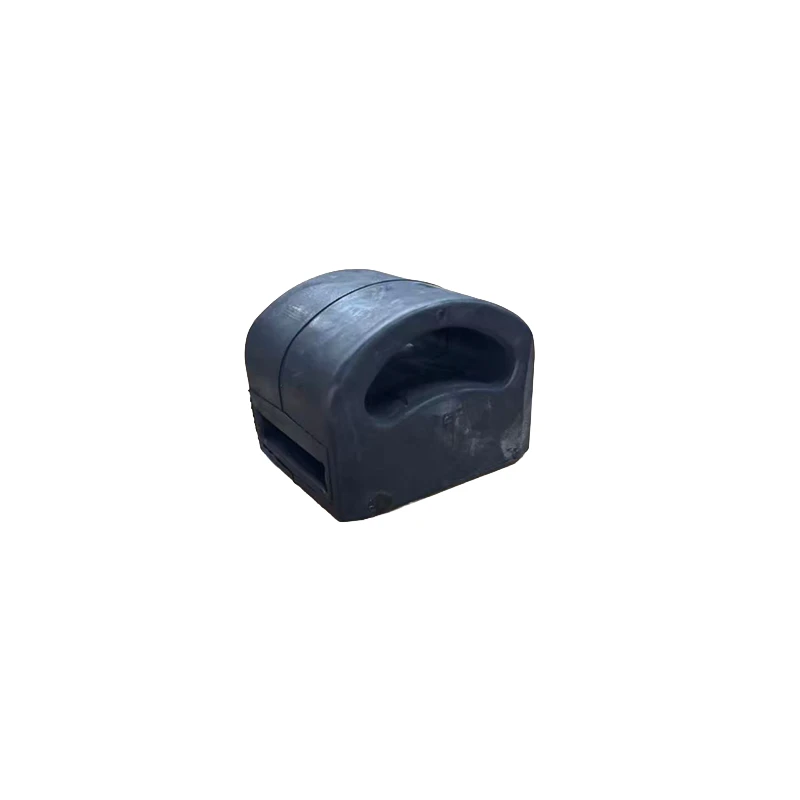

And of course, the Rubber Buffer Pad is a more versatile option. It can be used in a variety of high - speed applications to provide a cushion and absorb shock.
So, can rubber buffer blocks be used in high - speed applications? The answer is yes, but with careful consideration. You need to choose the right rubber compound, design the buffer block to handle the specific forces involved, and monitor the temperature and wear during operation.
If you're in the market for high - quality rubber buffer blocks or related products for your high - speed applications, we'd love to talk to you. Whether you have a high - speed train project, a racing team, or an industrial machinery setup, we can provide you with the solutions you need. Get in touch with us to discuss your requirements and see how our products can help.
References:
Smith, J. (2020). Rubber Engineering for High - Speed Applications. Industrial Rubber Journal.
Brown, A. (2021). The Impact of Heat Generation on Rubber Components in High - Speed Machinery. Journal of Mechanical Engineering.