

Hey there! As a supplier of Rubber Limit Pads, I often get asked about the hardness of these little but crucial components. So, let's dive right into it and explore what the hardness of a typical Rubber Limit Pad is all about.
What is Hardness in Rubber?
First off, we need to understand what hardness means when it comes to rubber. Hardness is a measure of how resistant a rubber material is to indentation. In simple terms, it tells you how “tough” or “soft” the rubber is. The most common scale used to measure rubber hardness is the Shore scale. There are different types of Shore scales, but for Rubber Limit Pads, we usually use the Shore A scale.
The Shore A scale ranges from 0 to 100. A lower number on the Shore A scale means the rubber is softer, while a higher number indicates a harder rubber. For example, a rubber with a Shore A hardness of 20 would be very soft, almost like a gel, while a rubber with a Shore A hardness of 90 would be quite hard, similar to a hard plastic.
Factors Affecting the Hardness of Rubber Limit Pads
Now, let's talk about what affects the hardness of a typical Rubber Limit Pad. There are several factors that come into play, and understanding these can help us determine the right hardness for different applications.
Material Composition
The type of rubber used in the Limit Pad is a major factor. Different rubber compounds have different inherent hardness levels. For instance, natural rubber can have a wide range of hardness depending on how it's processed, but it generally tends to be on the softer side. On the other hand, synthetic rubbers like nitrile rubber (NBR) can be formulated to have a higher hardness. We often use a blend of different rubbers to achieve the desired hardness and other properties like resistance to oil, heat, and abrasion.
Filler Content
Fillers are added to rubber to improve its properties. Common fillers include carbon black, silica, and clay. The amount and type of filler used can significantly affect the hardness of the Rubber Limit Pad. Generally, the more filler you add, the harder the rubber becomes. For example, adding a large amount of carbon black can increase the hardness and also improve the wear resistance of the rubber.
Cross - Linking Density
Cross - linking is the process where the rubber molecules are connected together. The density of these cross - links affects the hardness of the rubber. A higher cross - linking density means the rubber molecules are more tightly bound, resulting in a harder rubber. We can control the cross - linking density through the use of vulcanizing agents and the vulcanization process.
Typical Hardness Range for Rubber Limit Pads
So, what's the typical hardness range for Rubber Limit Pads? Well, it depends on the application. In general, Rubber Limit Pads used in most industrial applications have a Shore A hardness ranging from 40 to 80.
For applications where the Limit Pad needs to absorb a lot of shock and vibration, a softer rubber with a Shore A hardness of around 40 - 50 might be used. This softer rubber can compress easily, providing better shock absorption. For example, in some machinery where there are sudden impacts, a softer Rubber Limit Pad can prevent damage to the equipment by cushioning the impact.
On the other hand, for applications where the Limit Pad needs to provide more stability and support, a harder rubber with a Shore A hardness of around 70 - 80 might be more suitable. For instance, in automotive applications where the Limit Pad needs to keep components in place and resist deformation, a harder rubber is often used.
Applications and Hardness
Let's take a closer look at some specific applications and how the hardness of Rubber Limit Pads is chosen for each.
Automotive Industry
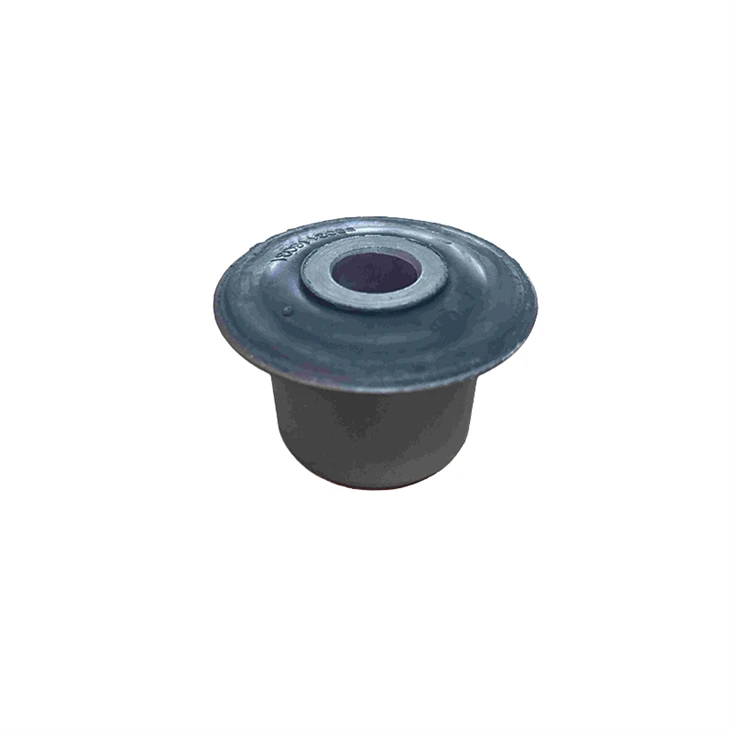
In the automotive industry, Rubber Limit Pads are used in various parts of the vehicle. For example, in the suspension system, they can be used as Automotive Rubber Buffer Assembly. Here, a medium - hard rubber with a Shore A hardness of around 50 - 60 is often used. This hardness allows the buffer to absorb shock from bumps and uneven roads while also providing enough support to keep the suspension in place.
Another application in the automotive industry is the use of Rubber Damper Pad in the engine compartment. These pads need to dampen vibrations from the engine. A harder rubber with a Shore A hardness of around 60 - 70 is typically used to ensure that the pad can withstand the high - frequency vibrations and heat generated by the engine.
Industrial Machinery
In industrial machinery, Rubber Limit Pads are used to protect equipment from impacts and vibrations. For example, in a conveyor system, Rubber Shock Block can be used to absorb the shock when items are loaded onto the conveyor. A softer rubber with a Shore A hardness of around 40 - 50 is often used here to provide maximum shock absorption.
In some heavy - duty machinery, Rubber Shock Absorber are used to reduce the impact of moving parts. A harder rubber with a Shore A hardness of around 70 - 80 is used to ensure that the absorber can handle the high forces and provide long - term stability.
Electrical Equipment
In electrical equipment, Rubber Mounting Pad are used to isolate the equipment from vibrations and prevent damage. A medium - hard rubber with a Shore A hardness of around 50 - 60 is often used. This hardness provides a good balance between shock absorption and support, ensuring that the electrical components are protected.
Testing the Hardness of Rubber Limit Pads
As a supplier, we take the hardness of our Rubber Limit Pads very seriously. We use a hardness tester to measure the Shore A hardness of our products. The tester works by applying a specific force to the rubber and measuring the depth of indentation. This gives us an accurate reading of the hardness.
We also conduct regular quality control checks to ensure that the hardness of our Rubber Limit Pads meets the specifications. If the hardness is outside the acceptable range, we adjust the manufacturing process to correct it.
Why Choose Our Rubber Limit Pads?
We offer a wide range of Rubber Limit Pads with different hardness levels to suit various applications. Our pads are made from high - quality rubber compounds that are carefully formulated to provide the best performance. We use advanced manufacturing techniques to ensure consistent quality and precision.
Whether you need a soft Rubber Limit Pad for shock absorption or a hard one for stability, we've got you covered. Our team of experts can help you choose the right hardness for your specific application.

Let's Connect!
If you're in the market for Rubber Limit Pads, I'd love to have a chat with you. We can discuss your requirements, and I can provide you with more information about our products. Don't hesitate to reach out and start a conversation about your procurement needs.
References
- ASTM D2240 - Standard Test Method for Rubber Property - Durometer Hardness
- Rubber Technology Handbook, Werner Hofmann